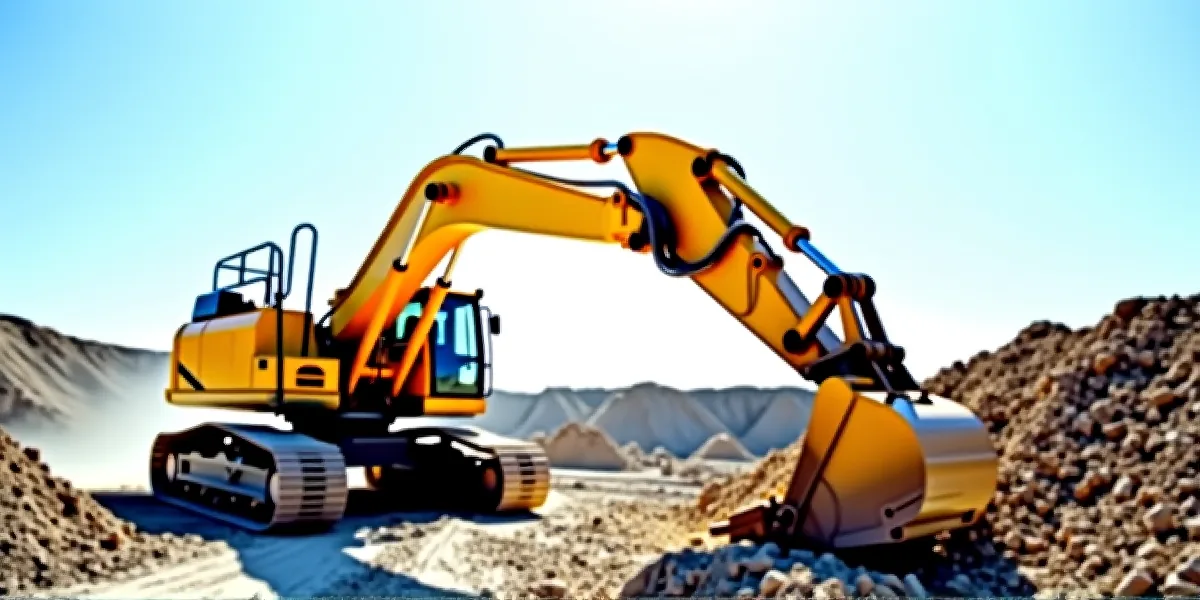
Choosing the Right Excavator for Your Farm: A Practical Guide
Walking around a farm, you quickly realize that "one size fits all" is a myth. The equipment that works for a small hobby acreage is often too weak for a commercial dairy operation, while the heavy iron needed for large-scale land clearing is impossible to move through standard field gates. For many farmers, the Excavator has become the most versatile asset on the property, replacing manual labor for everything from pond digging to barnyard cleanup. But with sizes ranging from 1.5 tons to over 20 tons, picking the right machine is a critical decision that impacts your bottom line and your daily workflow.
This guide breaks down the practical differences between mini, midi, and large Excavators in a farm setting, helping you decide which class of machine actually fits your land and your budget.
Understanding the Size Classes
Before looking at specific tasks, you need to understand the three main categories relevant to farming. The first is the micro or mini Excavator, typically ranging from 1.5 to 3 tons. These machines are designed for tight spaces. A 1.5-ton unit can often squeeze through a standard garden gate, making it ideal for orchards with narrow rows or small backyard projects. However, its digging depth is limited to around 2 meters, and its bucket size is small, meaning it takes longer to move large volumes of earth.
The second category is the midi Excavator, usually between 5 and 8 tons. This is often considered the "sweet spot" for working farms. A 7-ton machine, for example, offers significantly more breakout force and a larger bucket (around 0.3 cubic meters) than a mini, yet it remains compact enough to fit through most farm field gates. It can be hauled on a heavy-duty trailer behind a standard truck without requiring an expensive lowboy transport.
Finally, there are large excavators, starting at 10 tons and going up to 20 tons or more. These are built for mass excavation, heavy rock work, and large dam construction. While they are incredibly powerful, they are heavy, expensive to operate, and often cannot fit through standard farm infrastructure. They also exert high ground pressure, which can damage soft pasture land if not managed carefully.
Common Farm Applications by Machine Size
Different jobs require different levels of power and reach. For a small hobby farm or a mixed livestock operation, a 3-ton mini excavator is often sufficient. It handles shallow trenching for irrigation lines, digging post holes for fencing, and light demolition of old concrete pads. If you are digging a small koi pond or a retention basin up to 1.5 meters deep, a 3-ton machine will handle the job efficiently. It also excels at cleaning out barn alleys and removing moderate tree stumps, tasks that would overwhelm a 1.5-ton unit.
As the farm grows, so do the requirements. A 7-ton midi excavator becomes necessary when you start building larger livestock watering ponds, which may require depths of 4 meters. It is also the right tool for building and maintaining farm roads. A 7-ton machine can grade gravel lanes, repair washouts, and dig deep side drainage ditches to prevent erosion. Its lifting capacity is high enough to place large culverts and precast concrete sections, tasks that are physically impossible for smaller minis. For large commercial farms dealing with heavy rock or massive land clearing, a 12-ton or larger excavator is the standard, though this is less common for general farm maintenance.
Transportation and Access Considerations
One of the biggest advantages of owning an excavator over hiring a contractor is control over your schedule. However, this only works if you can actually get the machine to the job site. A 1.5-ton or 3-ton excavator can be loaded onto a small tandem trailer and towed by a half-ton pickup truck. This eliminates the need for special permits or expensive lowboy transport, making it easy to move the machine between fields or to a neighbor’s property for a quick job.
A 7-ton excavator requires a heavier trailer and a larger truck, but it still avoids the need for a lowboy in most cases. This is a significant cost saver. In contrast, a 20-ton excavator requires specialized transport that can cost more than the machine’s daily operating cost. If your farm has narrow gates or soft, muddy ground, consider the ground pressure. Rubber tracks on mini and midi excavators provide low ground pressure, allowing them to work on wet pasture without sinking as badly as wheeled equipment or heavy steel tracks. This preserves your topsoil and reduces compaction, which is vital for crop and livestock land.
Attachments That Extend Utility
The value of an excavator on a farm is multiplied by its attachments. A standard digging bucket is just the starting point. For a farm, a hydraulic thumb is one of the most valuable upgrades. It allows you to clamp rocks, roots, and debris against the bucket, making cleanup and boulder placement much faster. If you are doing a lot of fencing, an auger attachment is essential for drilling post holes quickly, especially in hard ground where a manual post hole digger would take all day.
For water management, a ditching or tilt bucket is highly recommended. It allows you to shape pond banks, grade roads, and clean long drainage ditches with precision. A land rake is another useful tool for clearing roots and stones while leaving topsoil intact for planting. Finally, a quick coupler system saves time by allowing you to swap attachments without manually pulling pins. When buying, ensure the machine you choose is compatible with the attachments you plan to use, as not all Brands are interchangeable.
Cost and Return on Investment
Buying an excavator is a significant investment, but it often pays for itself by eliminating subcontractor fees. A 3-ton mini excavator can cost between $25,000 and $50,000 new, while a 7-ton midi might range from $60,000 to $100,000 depending on the brand. Used machines with 1,000 to 3,000 hours offer a cheaper entry point, often retaining 60-70% of their value after several years.
Operating costs vary by size. A 3-ton machine burns roughly 3 to 5 liters of diesel per hour, while a 7-ton machine uses more, but still less than a large 20-ton unit. The real savings come from labor. If you are paying a contractor $150 per hour for earthwork, doing it yourself with an owned machine can recoup the purchase cost in a few years, especially if you use the machine 80 to 100 days per year. Additionally, owning the machine allows you to take on last-minute jobs without waiting for rental delivery, which can be a competitive advantage if you offer services to neighboring farms.
Conclusion
Choosing the right excavator for your farm comes down to balancing access, power, and budget. For small farms with tight spaces and light earthmoving needs, a 3-ton mini excavator is a practical and affordable choice. For working farms that require pond construction, road maintenance, and heavy lifting, a 7-ton midi excavator offers the best combination of capability and mobility. While larger machines are more powerful, they come with higher transport costs and access limitations that often make them impractical for general farm use. Assess your most frequent tasks, measure your gate widths, and consider how often you will use the machine. The right excavator is not just a tool; it is a partner in maintaining your land efficiently and profitably.