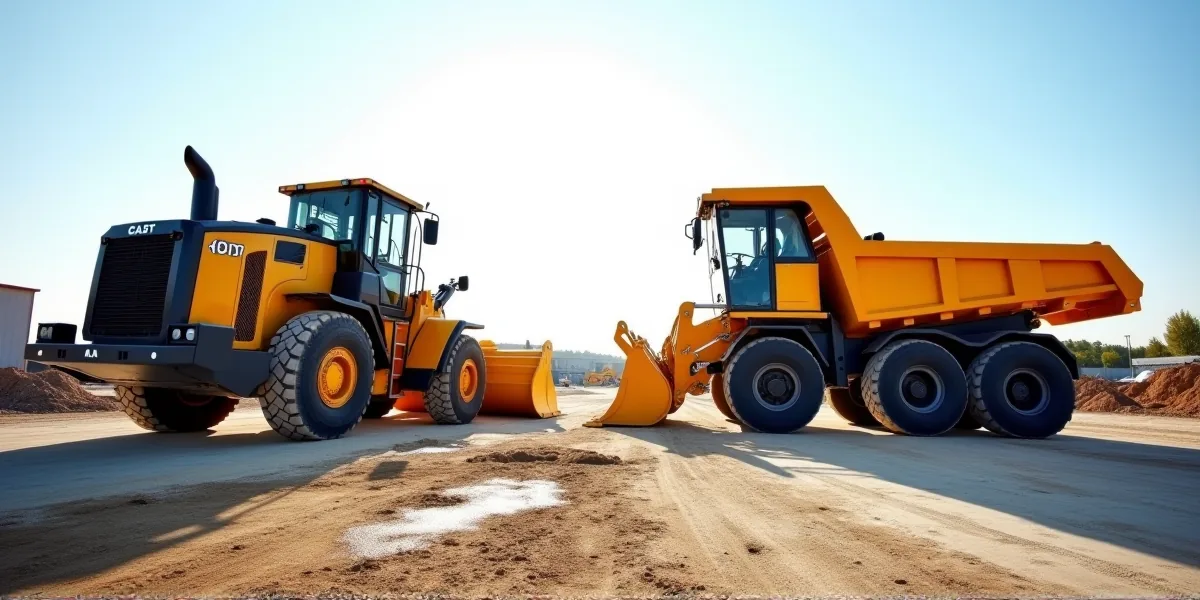
How to Verify a Chinese Construction Machinery Supplier: A Practical Guide
The global construction machinery market offers incredible value, but it is also rife with risk. You are looking for a machine that will work for years, not just a shiny object for a photo. The biggest fear for international buyers is not the price tag, but the reality: you might end up with a broker pretending to be a factory, a machine that doesn't meet the specs, or a payment that vanishes into a personal bank account. Trust is not given; it is verified. To protect your capital and your project timeline, you need a systematic approach to vetting your supplier. This guide breaks down the specific steps to confirm a supplier is legitimate, capable, and trustworthy before you send a single dollar.
Start with Legal Verification, Not Handshakes
Before you discuss price or specs, you must confirm the entity actually exists. In China, every registered company has an 18-digit Unified Social Credit Code. Request the supplier’s business license and cross-reference this code on the National Enterprise Credit Information Publicity System (gsxt.gov.cn). This public database is your first line of defense. It will tell you if the company is active, if it has court judgments against it, or if it is listed in the "serious dishonesty" registry. A supplier who cannot provide this code, or who hesitates when asked, is a major red flag.
Look closely at the "business scope" on the license. It should explicitly list manufacturing or production. If it only lists trading, you are buying from a broker. Brokers are not inherently bad, but they have less control over quality and custom specs. They outsource production, meaning you are one layer removed from the source. If you are buying a standard excavator or loader, a broker might be fine. If you are buying a custom block handler or a heavy-duty attachment, you want to deal with the OEM (Original Equipment Manufacturer) directly. Also, verify their export registration documents and ISO 9001 certificates. Do not trust the PDF they send you; verify the certificate numbers online to ensure they are real and not edited images.
The Live Video Audit: Seeing Is Still Believing
Photos can be stolen. Videos can be pre-recorded. The gold standard for remote verification is an unplanned, live video call. Do not accept a scheduled tour where they have time to stage the factory. Call them and ask to see the floor right now. Ask the person on the camera to hold up a local newspaper with the current date to prove the footage is live. This simple trick filters out many scammers who rely on stolen footage from other factories.
During the call, direct the camera to specific areas. Show me the assembly line. Are workers welding? Are machines being painted? Show me the raw material warehouse. Are there piles of steel plates, hydraulic cylinders, and engines, or is it empty? Show me the testing area. A genuine manufacturer runs load tests and hydraulic checks before shipping. If the factory looks like a clean showroom with only two or three demo machines and no active production, you are likely dealing with a trading company posing as a factory. If your budget allows, an on-site audit is still the best option. Walk the floor, check the serial numbers on the machines, and observe the quality control process firsthand.
Use Independent Third-Party Inspections
Even if the supplier seems legitimate, you need an independent set of eyes. Engage a reputable third-party inspection agency such as SGS, Bureau Veritas, TÜV Rheinland, or CCIC. These agencies offer two critical services: a pre-deposit supplier audit and a Pre-Shipment Inspection (PSI).
The supplier audit confirms the factory’s capability and quality systems before you commit funds. The PSI is performed after the machine is built but before it is loaded onto the vessel. The inspector will verify that the finished machine matches your contract exactly—checking model numbers, attachments, paint quality, and hydraulic function. They also witness the loading process to ensure the machine is secured correctly for sea transport. This step costs a few hundred to a few thousand dollars, but it prevents the "bait-and-switch" scam where a high-quality demo unit is shown, but an inferior, refurbished, or incomplete unit is shipped. The inspector’s report is independent and cannot be altered by the supplier.
Identify the Red Flags That Save You Money
Experience teaches you to recognize the warning signs early. If you encounter any of the following, stop negotiations and walk away:
Payment to personal accounts: Legitimate manufacturers use corporate bank accounts. If they ask for payment via Western Union, personal bank transfers, or cryptocurrency, it is fraud. Unrealistic pricing: If a machine is 25–30% below the market rate for the same specs, it is too good to be true. This usually signals hidden quality cuts, refurbished parts, or outright theft. Avoidance tactics: Suppliers who refuse live video tours, avoid on-site audits, or only send pre-recorded promotional videos are hiding something. High-pressure sales: If they create fake urgency—"another buyer is ready," "discount expires today"—they are manipulating you to bypass due diligence. Inconsistent communication: If contact staff change frequently or they use free Gmail/Yahoo addresses instead of a corporate domain, the company is likely unstable or fraudulent.
Practical Advice for Final Verification
Before signing a contract, request 2–3 references from overseas customers. Do not just accept the email addresses they provide. Ask for the company names and look for these customers independently, or call them directly to verify the relationship. Review their export history using customs data platforms like Panjiva or ImportYeti. This will show you if they have actually shipped similar Machinery to your region. If they claim to be a top exporter but have no customs records, their claims are false.
Finally, ensure your contract is specific. Include the clamping range, jaw depth, and working load limits for attachments. Specify that rubber jaw pads must be replaceable. Include a clause that the delivered machine must match the serial number inspected by the third-party agency. By combining legal checks, live verification, independent inspection, and a watertight contract, you eliminate the guesswork. You are not just buying a machine; you are buying peace of mind. Take the time to do this verification properly, and you will avoid the costly mistakes that plague many international buyers.