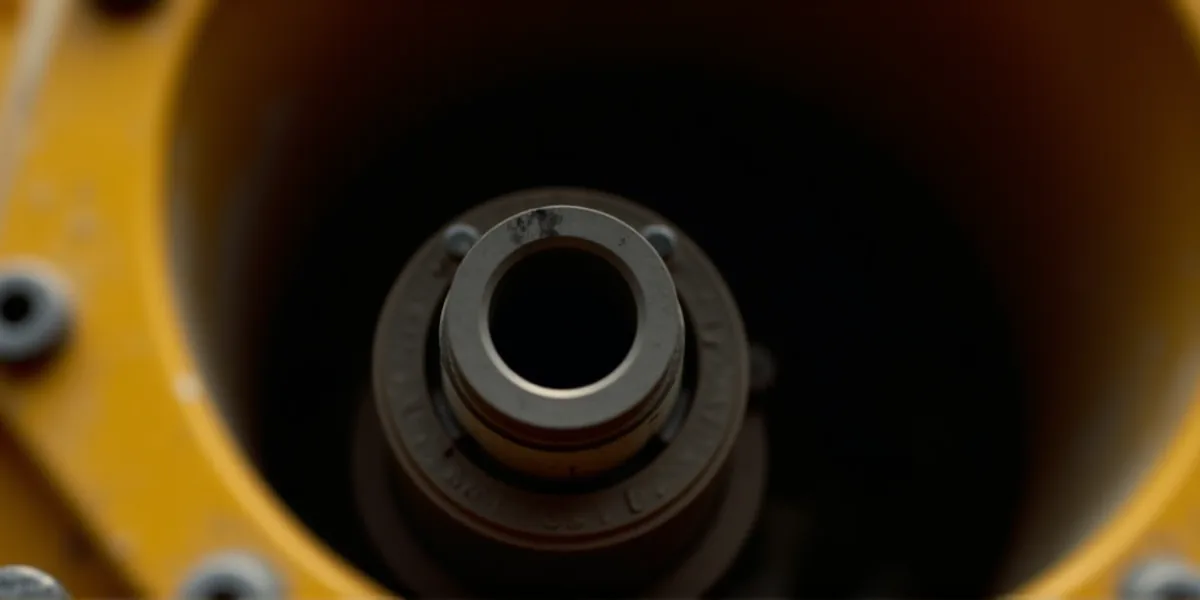
Why Your Hydraulic Pressure Recorder Might Be Lying to You
Hydraulic oil pressure recorders are critical for monitoring the health of excavators, wheel loaders, dozers, and skid-steers. These onboard data loggers capture timestamped pressure data from piezoresistive transducers installed in main pressure lines, return circuits, or pilot control manifolds. The data they provide reveals pump health, relief valve settings, cylinder leakage, and valve sticking issues. Uncontrolled pressure spikes can rupture hoses, crack manifolds, and destroy pump components, making accurate logging essential for preventative maintenance.
However, the measurement chain is complex. It involves the pressure transducer, pressure snubber, wiring harness, chassis ground, ECU, and the data recorder itself. In the harsh environment of a construction site, common failures arise from blocked transducer ports, diaphragm fatigue, corroded connectors, and electromagnetic interference. A frequent error is assuming a bad reading means a bad recorder. Often, the issue lies upstream in the sensor or wiring, while operators mistakenly continue operating, leading to sudden hose failure or catastrophic breakdowns.
Recognizing Common Recording Faults
Before you replace expensive hardware, you need to identify what the data is actually telling you. Several distinct patterns indicate specific problems.
Frozen or Static Logs: If the recorder stores an unchanging pressure value regardless of actuator movement, the transducer pressure port is likely blocked by sludge, varnish, or fine metal particles. This isolates the sensing diaphragm from the actual oil pressure. Other causes include a failed diaphragm or a loss of reference power.
Erratic, Noisy Traces: Rapid random spikes under steady load usually point to pressure pulsation from piston pumps, insufficient snubber damping, or air entrainment in the oil. Poor grounding and unshielded wiring can also introduce electrical noise that manifests as jagged pressure logs.
Persistent False High-Pressure Readings: If the recorder logs extreme peaks while a portable test gauge shows normal system pressure, the transducer diaphragm may be fatigued, or signal wires may be shorted. Improper mounting without a snubber can also amplify transient spikes, creating false alarms.
Blank Readings or Data Gaps: Missing time segments in log files often stem from blown fuses, intermittent 12V/24V power supply issues, or internal flash memory corruption. Water intrusion into the recorder housing is another common culprit.
Permanently Low Pressure: Consistent near-zero readings despite a pressurized circuit usually indicate a blocked pressure port, a ruptured diaphragm, or a leaking isolation valve between the transducer and the Hydraulic line.
Inspection Protocols: Daily to Annual
Consistent inspection schedules are the best defense against data integrity issues. Always follow lockout/tagout procedures: shut the engine, lower implements to the ground, relieve residual Hydraulic pressure, and disconnect battery power before opening any connectors. Wear hydraulic safety glasses and protective gloves when working on pressurized fittings.
Daily Pre-Shift: Check the recorder power indicators after startup. Observe live pressure values during joystick operation to confirm they rise and fall smoothly. Review recent logs for unexplained spikes or missing data. Inspect the recorder housing for cracks or water stains.
250-Hour Service: Inspect the wiring harness routing from the recorder to the transducer. Look for wire chafe, cracked insulation, and corroded Deutsch connector pins. Perform a "wiggle test": gently move wiring and connectors while watching live data. Sudden jumps indicate intermittent connection faults. Clean pins with electrical contact cleaner and apply dielectric grease. Crucially, inspect the transducer pressure port and snubber for sludge or debris buildup and check for oil weeping at threaded fittings.
1,000-Hour / Annual Major Inspection: Retrieve ECU and recorder fault codes. Download stored pressure logs to analyze peak trends. Remove the transducer and inspect the inlet port for blockages. Verify the snubber orifice is clean. Compare recorder readings against a certified portable Hydraulic pressure gauge connected at the same test point. Inspect chassis ground points for rust or paint buildup that can disrupt signal integrity. Always back up historical logs before clearing memory.
Systematic Testing to Isolate Faults
When data looks wrong, you must isolate the fault between the transducer, the wiring, and the recorder. Use a multimeter, diagnostic scanner, and signal simulator for this process.
Power and Visual Test: Verify stable 12V or 24V power and chassis ground at the recorder connector. Without stable power, the recorder cannot capture data.
Signal Substitution Test: This is the most effective diagnostic step. Disconnect the pressure transducer. Use a signal simulator to inject pre-programmed analog (4–20mA) or CAN bus signals corresponding to known pressure levels into the harness connector at the sensor end. If the recorder captures these simulated values correctly, the wiring and recorder are functional, and the fault lies with the physical transducer. If the recorder fails to record or shows wrong values, the harness or recorder is faulty.
Live Comparison Test: Run the machine to operating temperature. Connect a certified portable Hydraulic pressure gauge to the same test point as the transducer. Compare the live gauge reading to the recorder data. A large deviation confirms a fouled transducer, poor snubber function, or circuit drift.
Wiring Continuity: Check continuity between transducer pins and the ECU/recorder. Test for shorts to ground or battery positive, which distort readings.
When to Replace vs. Repair
Never replace the pressure recorder before testing the transducer, snubber, wiring, and power supply first. Most inaccurate readings originate at the transducer, not the recorder. Replace the recorder only if:
- There is permanent physical damage, such as a cracked housing, water corrosion, or a burned circuit board that is not economically repairable.
- Signal substitution testing proves the recorder fails to capture valid input signals while the transducer and wiring test good.
- Internal memory or logging electronics are damaged by voltage spikes or moisture, and component-level repair is impractical.
- The recorder cannot be reconfigured to match the machine’s communication protocol, and pressure offset remains outside OEM tolerance after reset.
When installing a replacement, select OEM or compatible hardware that matches the machine’s CAN bus or analog signal specification. Verify pinouts and power connections. After installation, run the machine through a full cycle and cross-check recorded logs with a calibrated portable gauge.
Best Practices for Accurate Data
To ensure your pressure recorder provides reliable data, follow these operational tips. Always use a pressure snubber on the transducer inlet. This protects the sensing diaphragm from rapid pressure transients and water hammer damage, which can cause diaphragm fatigue and false spikes. Maintain the snubber orifice clean and free of plugging.
Proper grounding is non-negotiable. Corroded or painted chassis grounds introduce noise that corrupts data. Keep the recorder and transducer connectors dry; never spray high-pressure wash water directly on electrical components. Finally, treat the recorder data as a trend, not just a snapshot. Combine online sensor data with periodic physical inspections of filters and hoses to build a complete picture of system health. If you see genuine abnormal pressure profiles, investigate the hydraulic system immediately rather than dismissing it as a sensor fault.
Conclusion
Hydraulic pressure recorders are powerful tools for preventing costly equipment failure, but they are only as good as the installation and maintenance behind them. By understanding common failure modes, adhering to strict inspection schedules, and using signal substitution to isolate faults, you can ensure that the data you rely on is accurate. Regularly validate your electronic readings against physical gauges and inspect the snubber and transducer ports for debris. A well-maintained recording system provides early warning of pump wear and valve issues, allowing you to fix small problems before they turn into catastrophic breakdowns on the job site.