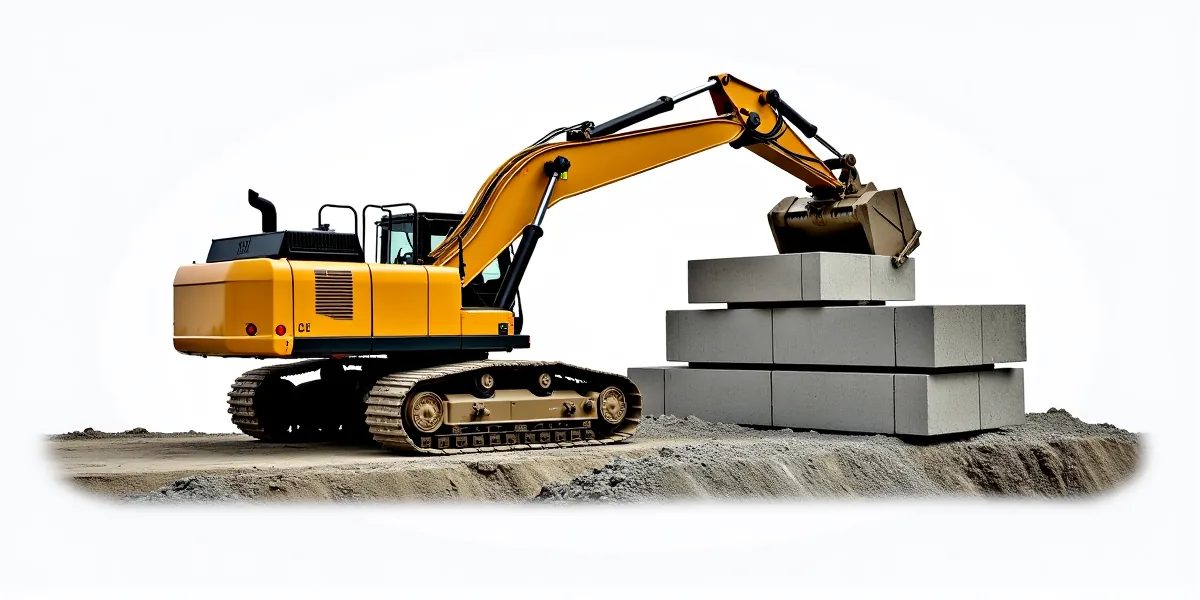
Understanding Block Handler Maintenance: More Than Just Routine Loader Service
Many operators make the mistake of treating a Block handler exactly like a standard wheel loader. While the chassis looks similar, the job is fundamentally different. A block handler is engineered to lift dense, monolithic stone or precast concrete blocks that weigh significantly more than typical bucket loads. The shock loads, the dust, and the uneven terrain accelerate wear in ways that standard service intervals often miss. If you skip specific inspections, you aren’t just risking downtime; you are risking a catastrophic tip-over or a fork failure that could injure someone. This guide outlines the specific maintenance requirements for block handlers, focusing on the components that take the hardest hit in quarry and precast yard environments.
Adjusting Your Service Intervals for Heavy-Duty Work
Your OEM manual will list service intervals, but those charts are generally designed for standard bucket work. In a quarry or stone yard, the environment is harsher. Dust penetrates every seal, and the constant shock of lifting heavy stone puts extra stress on the drivetrain and hydraulics. As a rule of thumb, shorten your OEM service intervals by 20% to 30% if you are operating in heavy dust or impact conditions.
Pre-shift walkarounds are non-negotiable. Before you lift the first Block of the day, check fluid levels, tire pressure, and, most importantly, the fork carriage. Look for leaks around the hydraulic cylinders and listen for any unusual whining from the lift pump. At the 250-hour mark, you should be performing a full greasing of all pins and bushings, cleaning the radiator core of dust buildup, and taking an oil sample for analysis. By 500 hours, change the engine oil and filters, inspect the hydraulic hoses for abrasion, and re-torque the fasteners on the block fork carriage. Vibration from carrying heavy loads loosens bolts faster than you think.
Inspecting the Fork Carriage and Tines
The Block forks are the most critical safety component on the machine. Unlike standard pallet forks, block tines are thick, forged steel designed to absorb impact. However, they are still subject to fatigue. You need to measure tine thickness regularly. If you are seeing significant wear, or if the tines are bent even slightly, the load center shifts, reducing your tipping load and stability.
Inspect the welds at the root of the tines and along the carriage backrest for cracks. Fatigue cracks often start at the welds where stress concentrates. If you find a crack, remove the forks from service immediately. Do not attempt to field-weld a cracked tine. The heat-affected zone can weaken the metal further, leading to sudden failure under load. Additionally, check the carriage mounting bolts. These must be torqued to specification regularly, as the vibration from driving over rough quarry ground will loosen them over time. A loose carriage can shift, causing the Block to slide forward and tip the machine.
Managing Hydraulics and Structural Wear
Hydraulic drift is a common sign of trouble in Block handlers. If a block slowly lowers while the operator is not moving the control lever, you have worn cylinder seals. This is a safety hazard and a sign that internal contamination is occurring. Quarry dust is the primary enemy here; it enters through worn seals and degrades the hydraulic oil, damaging pumps and valves. Check hoses for abrasion and rub points against rocks or the frame. A burst hose under full lifting pressure can cause the load to drop instantly.
Structural wear is also a key concern. The lift arm, boom linkage, and pins take a beating from repeated shock loads. Excessive play in the pins and bushings causes "load bounce," which accelerates frame stress and makes the machine feel sloppy. Grease these points daily in dusty environments. At the 2,000-hour mark, you should be measuring pin and bushing clearance. If the wear exceeds OEM specifications, replace the components. Continuing to run with excessive play will damage the frame and reduce the machine's overall stability.
Tire and Counterweight Integrity
Tires are one of the highest ongoing costs for block handlers. Sharp rock and uneven ground cut tires quickly. Check pressure and sidewall damage daily. Underinflated tires not only fail faster but also reduce the machine's stability, increasing the risk of tipping when carrying heavy forward loads. Keep a close eye on the counterweight assembly as well. Inspect the mounting bolts and welds on the rear counterweight. A loose counterweight destroys the machine's stability margin. This is a unique inspection point for block handlers compared to standard loaders, where the counterweight is less critical for tip-over stability in the same way. If you notice any movement or cracking in the counterweight mount, stop work and have it inspected by a structural engineer.
Documentation and Operator Awareness
Maintenance isn’t just about parts; it’s about data. Ensure your load chart and capacity decals are legible and correctly updated for your specific fork attachment. Many operators mistakenly use the fork’s nameplate rating rather than the combined machine/attachment rating, which creates a rollover risk. The safe working limit is determined by the machine’s tipping load with the specific fork length and load center. Train your operators to understand that lifting height reduces capacity much faster on a block handler than on a standard loader. Regularly review maintenance logs to identify trends, such as frequent hydraulic drift or excessive pin wear, which may indicate a systemic issue with filtration or operator technique.
Conclusion
Block handler maintenance requires a shift in mindset from standard loader care. The stakes are higher because the loads are denser and the terrain is rougher. By shortening service intervals, rigorously inspecting forks and structural welds, and keeping hydraulic systems clean, you can prevent the most dangerous failures. Treat your block handler with the respect it deserves, and it will deliver reliable service for years in some of the toughest environments in construction.