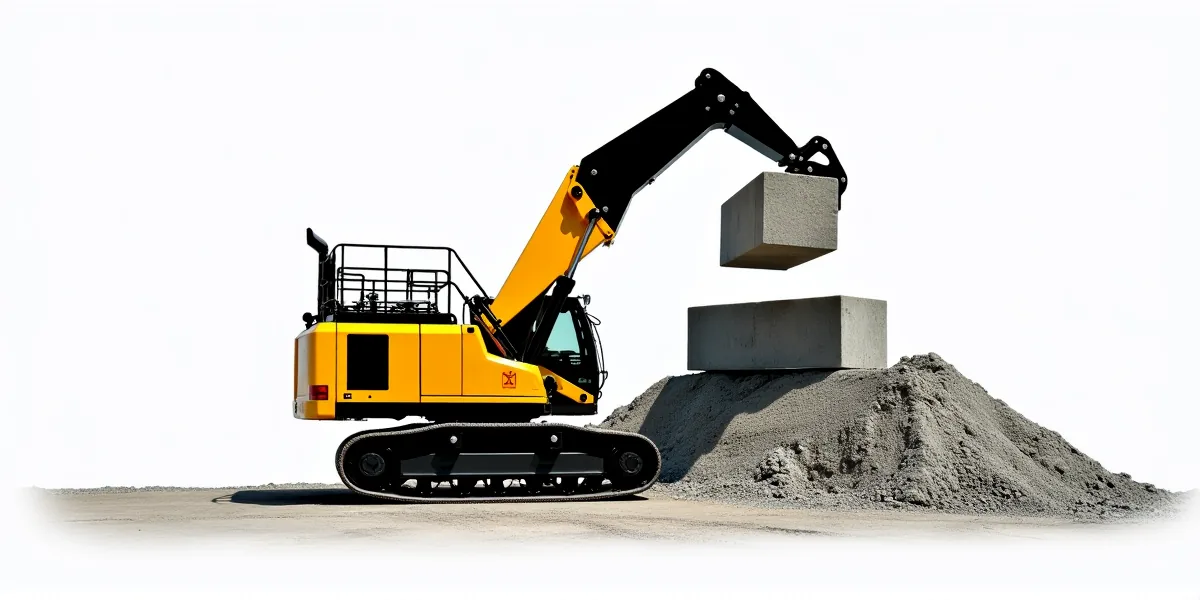
Why Block Handler Safety Starts Before You Lift the First Stone
Working with natural stone in a quarry is different from moving dirt or sand. Stone Blocks are dense, irregular, and unforgiving. A block handler, whether mounted on a wheel loader or an excavator, turns a standard machine into a precision lifting tool. But that precision only works if the safety protocols are tight. Most serious incidents in stone handling don’t happen because the machine failed; they happen because the clamping technique was sloppy, the exclusion zone was ignored, or the operator underestimated the weight of a specific block. This guide breaks down the practical steps you need to take to keep your crew safe and your equipment out of the repair shop.
Know Your Limits: Weight, Reach, and Jaw Capacity
The first rule of Block handling is to stop guessing the weight of the stone. Every block is different. A block that looks manageable might be significantly heavier than the previous one due to density or size variations. Always use the manufacturer’s Working Load Limit (WLL) chart for your specific attachment. Crucially, understand that the WLL drops as the jaws open wider. A load that is safe with the jaws closed might be dangerous if the jaws are spread to their maximum width. Before you lift, calculate or weigh the block. If you are unsure, treat it as the heaviest possible load for that size. Overloading the hydraulic system or the host machine’s boom is the fastest way to cause a catastrophic failure. Additionally, check the host machine’s own load chart. If you are using an excavator, remember that lifting capacity decreases significantly when working over the side rather than front or back. Never exceed the lower of the two limits: the host machine’s capacity or the attachment’s capacity.
Pre-Use Inspections: The Jaws and the Hydraulics
A Block handler is only as good as the condition of its rubber jaw pads. These pads provide the friction necessary to hold the stone. At the start of every shift, walk around the attachment and inspect the pads for wear, cuts, or missing chunks. Worn or glazed pads are the leading cause of blocks slipping out during transport. If the rubber is smooth or hard, it will not grip wet or polished stone. Clean all dirt, rock fragments, and debris from the block surfaces before gripping. A layer of dust or loose rock between the pad and the stone reduces contact area and increases the risk of the block rotating or slipping. Also, inspect the jaw arms, pivot pins, and welds for cracks or bending. Check the hydraulic hoses and cylinders for any signs of chafing, bulging, or oil weeping. If you see a leak, relieve the hydraulic pressure before attempting any repairs. Never try to force the jaws open or closed if they seem stuck; this can shear pins or damage the hydraulic circuit.
Clamping Technique and Stable Handling
How you engage the stone matters as much as the machine itself. Always clamp only solid, intact stone. Avoid Blocks that are cracked, split, or heavily veined, as these can break under the clamping pressure, causing the block to shatter or the jaws to close unevenly. The jaws must grip the block at its center of gravity. If you clamp one end of a long block, it will act like a lever, putting immense stress on the pivot pins and potentially causing the block to rotate out of the jaws. Never use the grab to pry stuck blocks loose or to drag stone sideways. These side-pull forces are not what the attachment is designed for and can bend the frame or damage the host machine’s boom. When moving the block, keep the motion slow and smooth. Sudden jerks, fast slewing, or sharp stops create shock loads that can make the stone slip. Maintain constant hydraulic clamping pressure while the block is off the ground. If you hear a change in the hydraulic sound or feel a drop in pressure, put the block down immediately and inspect the grip.
Ground Crew Safety and Exclusion Zones
The biggest risk to life in a quarry is not the machine overturning; it is a ground worker being crushed or struck by falling stone. Establish a strict exclusion zone around the full swing radius and the fall zone of the Block. This area should be marked with barriers or high-visibility tape. No worker should stand underneath a suspended block, between two blocks, or in the path where a block would fall if it slipped. This rule applies even if the block is low to the ground. Use a trained spotter or marshaller who has agreed hand signals or two-way radio communication with the operator. The spotter should be in a position where they can see both the block and the operator. If the line of sight is blocked, stop the work. Ground workers must never reach into the jaws while the grab is loaded or while hydraulic power is active. If a block is stuck, it is better to wait and use a pry bar or other tools from a safe distance than to risk a sudden release of the stone. Communication is key: the operator should not accept verbal pressure to work outside safe limits or to lift faster than is safe.
Operational Best Practices for Daily Work
Park the host machine on firm, level ground before starting work. Soft or uneven ground can cause the machine to shift during a lift, changing the center of gravity and potentially causing a tip-over. When moving the machine with a loaded block, keep the block low to the ground to lower the center of gravity. Avoid crossing slopes; if you must, travel straight up or down the incline, never across it. Before shutting down the machine, lower the grab fully to the ground. This releases the hydraulic pressure in the cylinders and prevents the jaws from closing unexpectedly when the system is restarted. If you are using an excavator, be mindful of the swing radius. The counterweight can trap workers between the machine and a wall or truck. Always check all directions before slewing. In poor visibility, such as dusty conditions or night work, reduce speed and add additional spotters or lighting. Finally, keep the operator’s manual for your specific attachment and host machine in the cab. Do not rely on habit from other machines. Controls, load charts, and safety features vary between models, and reading the specific documentation for your equipment is a non-negotiable part of safe operation.
Conclusion
Block handler safety is not about one single rule; it is about a combination of correct machine setup, proper inspection, disciplined technique, and clear communication with ground crew. By respecting the load limits, maintaining the jaw pads, and enforcing strict exclusion zones, you eliminate the most common causes of stone handling accidents. The cost of a thorough pre-shift inspection and a few extra seconds for a safe swing is negligible compared to the cost of a crushed worker or a damaged machine. Treat every block as if it is heavier and more unstable than it looks, and you will keep your operation running safely and efficiently.